What a DOT sidewalk violation means
In New York City, the owner of a property is responsible for the sidewalk next to it. When NYC DOT inspects a sidewalk and finds defects, it issues a Notice of Violation to the owner listing the problems and the deadline to correct them. If the work is not done in time, the city can hire its own contractor to make the repair and bill the property owner, and unpaid charges can become a lien on the property.
Violations tend to surface at inconvenient moments: during a sale or refinance, after a neighbor's complaint, or following a trip and fall claim. The good news is that a violation describes a clear, fixable scope of work, and correcting it properly is routine for Paverly Sidewalk Manhattan.
Defects that commonly lead to a violation
- Trip hazards, where one flag sits half an inch or more above the flag next to it.
- Broken, cracked or collapsed flags that are no longer a solid walking surface.
- Undermined or sunken sections where the base beneath has failed.
- Patchwork with asphalt or other materials that do not match the sidewalk.
- Improper slope that directs water toward the building or creates a hazard.
- Hardware defects, such as covers or cellar door frames sitting above or below the surface.
Our violation removal process
- Review the notice. Send us a photo of your Notice of Violation. We match each cited defect to the flags on site, so nothing is missed and nothing unnecessary is added.
- Written estimate. You receive an itemized price for the cited work, plus any adjoining flags that must be replaced to meet grade, with the reason for each.
- Permit. We apply for the NYC DOT sidewalk permit required for the repair.
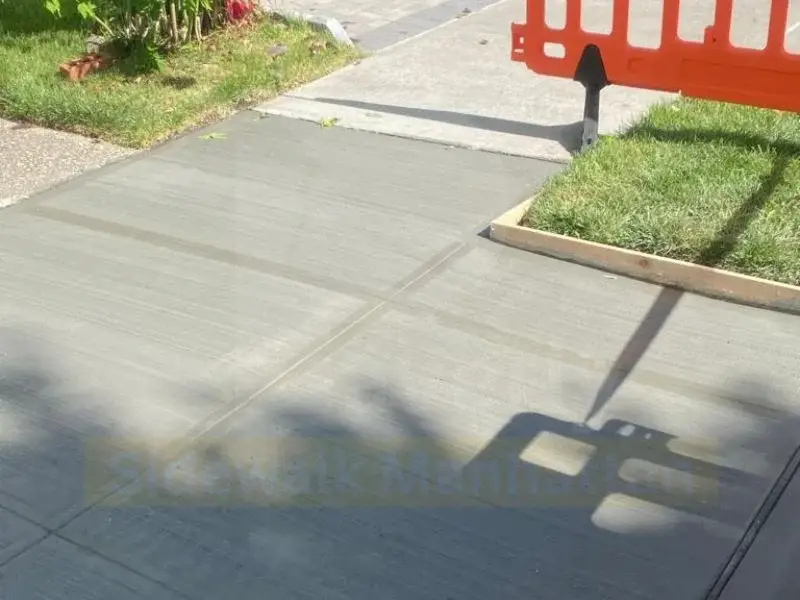
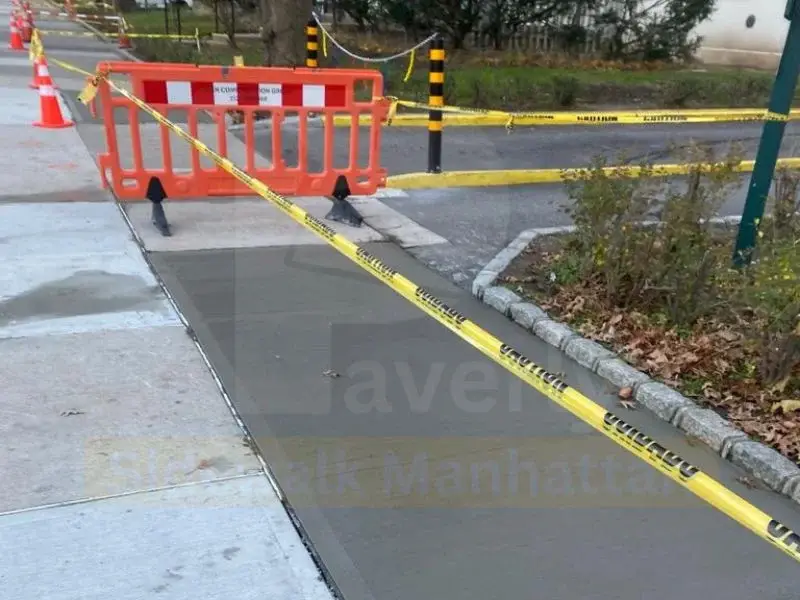
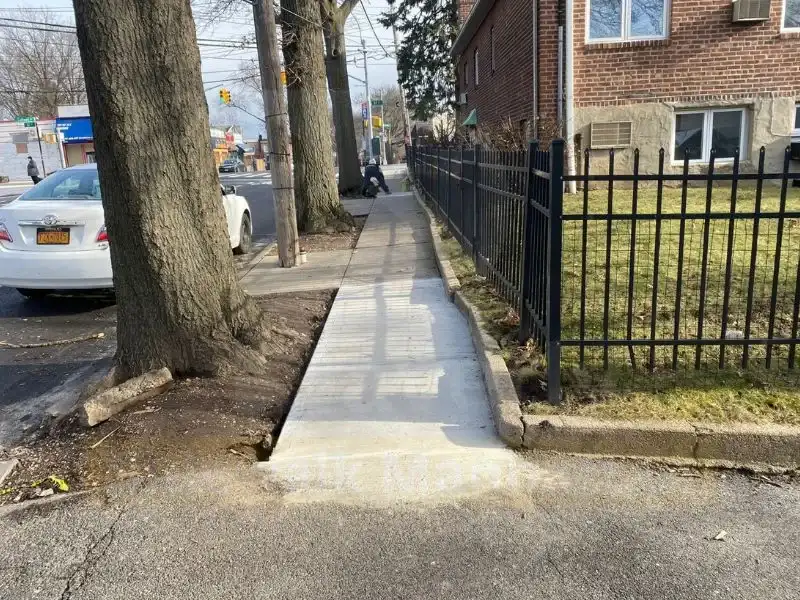
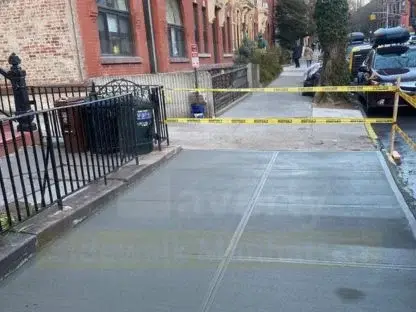
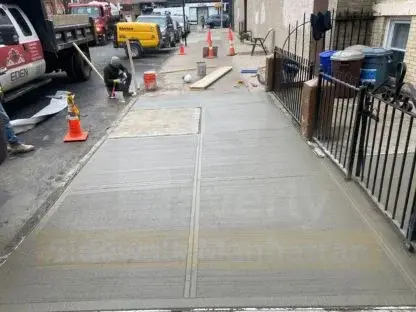
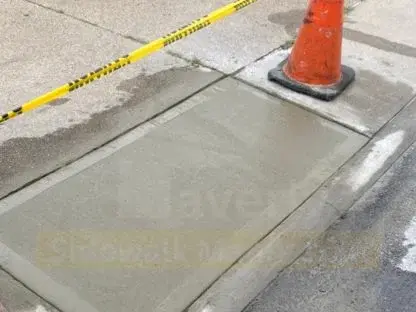
- Repair. Defective flags are removed full depth, the base is prepared, and new concrete is placed and finished to city specifications. Our sidewalk replacement page explains the build step by step.
- Close out. After the work, a dismissal inspection is requested from NYC DOT. We keep the permit and job records organized so you can show the violation was corrected.
Selling or refinancing? Open sidewalk violations can appear in municipal and title searches. Call early so the repair is finished well before your closing date.
When trees or curbs are part of the problem
If a city street tree caused the damage, the repair must be planned around the tree and NYC Parks rules; see tree root sidewalk repair. If the curb beside the cited flags is broken, we can price curb repair at the same time so the finished sidewalk sits correctly against it.
Why owners choose us for violations
- We price the cited scope, not a full sidewalk you do not need.
- Every repair is built to NYC DOT specifications so it holds up to inspection.
- We know Manhattan's building types, from Upper East Side co-ops to Harlem brownstones.
- Violation work is a core part of our sidewalk repair Manhattan practice, not a side job.
DOT Sidewalk Violation Removal FAQs
How long do I have to fix a DOT sidewalk violation?
Your Notice of Violation states the deadline. If repairs are not made in time, NYC DOT can hire its own contractor, bill the owner, and unpaid bills can become a lien on the property. Call as soon as the notice arrives so there is time for permits and scheduling.
Do I have to replace my entire sidewalk?
Usually not. The violation identifies the defective flags, and we price only the work needed to correct them plus any adjoining flags that must be replaced to meet grade. Every line of the estimate is explained.
How is the violation cleared after the repair?
Once the work is complete, a dismissal inspection is requested from NYC DOT. We keep the permit and job records organized so you have what you need to close out the violation.